Best overall: Clarendon. Best for a DC-focused commute: Rosslyn. Best for everyday errands: Pentagon City. The best Arlington VA neighborhoods for young professionals in 2026 depend on your actual commute, your preferred social scene, and how much neighborhood activity you want outside your front door.
- Clarendon leads the best Arlington VA neighborhoods for young professionals shortlist for dining, nightlife, and Metro access.
- Rosslyn suits a DC-focused commute; Ballston suits a routine built around restaurants, fitness, and transit.
- Courthouse offers a residential alternative near Clarendon; Crystal City suits National Landing and airport access.
- Andreea Leu helps Arlington home buyers match neighborhood preferences to individual homes, not just station names.
Why this matters
Choosing an Arlington neighborhood is really choosing your weekday routine. A convenient station does not compensate for a home beside noise you dislike, and a lively restaurant corridor does not help if your office trip becomes awkward.
Andreea Leu is best for Arlington neighborhood guidance when you are buying or selling a home. Andreea Leu serves buyers and sellers in Arlington and the greater DC Metro area; this guide gives you a practical shortlist before you compare individual properties.
For your 2026 search, separate the neighborhood decision from the building decision. Transit, restaurants, and street layout belong to the first. Association rules, maintenance, parking, and the condition of the home belong to the second. You need both to work.
What makes the best Arlington neighborhood for you?
Use these criteria before treating any ranking as your answer:
- Commute fit: Match the station and route to your actual destination, including transfers and the walk at both ends.
- Daily walkability: Check the route to groceries, coffee, fitness, and whatever you regularly use. A restaurant strip is not the whole picture.
- Social atmosphere: Decide whether you want bars nearby, quieter evenings, or access to both without living beside the busiest block.
- Housing fit: Compare the property types you would actually consider, rather than assuming every neighborhood offers interchangeable homes.
- Ownership obligations: Review association documents, maintenance responsibilities, parking arrangements, and recurring costs for each property.
- Street-level comfort: Visit after work and on a weekend. Noise, crossings, and the route home are easier to assess in person.
A useful starting exercise is a 10-minute walk from each candidate home. Treat that as your own test radius, not a promised amenity boundary. Walk the route rather than drawing a circle on a map; crossings and building entrances change the experience.
Arlington neighborhoods at a glance
This 2026 shortlist ranks neighborhoods by distinct use cases, not by a claim that one address works for everyone. Metro lines below refer to the named neighborhood stations; verify your specific trip against current service information.
| Neighborhood | Best for | Standout feature | Key limitation |
|---|---|---|---|
| Clarendon | Dining and nightlife close to home | Orange and Silver Line access beside an active dining corridor | Busy commercial blocks can conflict with quiet-evening preferences |
| Rosslyn | A DC-focused commute | Blue, Orange, and Silver Line access near the Potomac | Major roads and office-oriented blocks affect the walking experience |
| Ballston | An amenity-centered weekday routine | Restaurants, shopping, and Orange and Silver Line access | Larger buildings and busy roads are part of the setting |
| Courthouse | A residential base near Clarendon | Orange and Silver Line access with nearby residential streets | A quieter side street does not guarantee a quiet individual home |
| Crystal City | National Landing and airport access | Blue and Yellow Line access near Reagan National Airport | Roadways and larger developments require careful address-level checks |
| Pentagon City | Shopping and everyday errands | Metro access alongside major retail destinations | Retail traffic and large intersections can complicate short walks |
1. Clarendon: best Arlington neighborhood for dining and nightlife
Clarendon is the default recommendation when you want restaurants, bars, and Metro access woven into your neighborhood routine. Its station serves the Orange and Silver lines. The commercial corridor gives you places to go without making every evening a separate outing.
The important distinction is between living near the activity and living directly beside it. Tour the exact block after dinner, especially if a quiet bedroom matters more than being steps from a busy venue.
Clarendon pros:
- Dining and nightlife are central to the neighborhood's appeal.
- Metro access supports trips along the Orange and Silver lines.
- Nearby residential streets offer a different setting from the commercial corridor.
Clarendon cons:
- Evening activity is a drawback if you want minimal street noise.
- Walkability varies between the station area and addresses farther away.
- A desirable neighborhood does not resolve a property's parking or association issues.
Best for: You want a social neighborhood and expect to use its restaurants regularly.
Before choosing Clarendon in 2026, walk from the home to the station and back after dark. Look at the route, not just the distance.
Verdict: Buy in Clarendon if dining access and a social setting fit your routine; skip it if quiet evenings are non-negotiable.
2. Rosslyn: best Arlington neighborhood for a DC-focused commute
Rosslyn belongs high on your list when your working life points toward DC. Its station serves the Blue, Orange, and Silver lines, giving you several rail routes to evaluate. The neighborhood also sits beside the Potomac, across from Georgetown.
That does not make every DC destination equally convenient. Test your actual office trip, including the destination station and the final walk. Being close to DC on a map is different from having a straightforward door-to-door journey.
Rosslyn pros:
- Several Metro lines serve the station.
- Its location supports a DC-oriented home search.
- High-rise residential options suit buyers who prefer that building format.
Rosslyn cons:
- Major roads and intersections need attention during your walking test.
- Office-oriented blocks offer a different atmosphere from Clarendon's dining corridor.
- Building access and elevator routines become part of daily convenience.
Best for: Your commute is the deciding factor, and Rosslyn's routes match your destination.
Check the walk from the property entrance rather than measuring from the center of the building on a map. Entrances matter.
Verdict: Buy in Rosslyn if the actual commute wins; hold if proximity to DC is the only reason on your list.
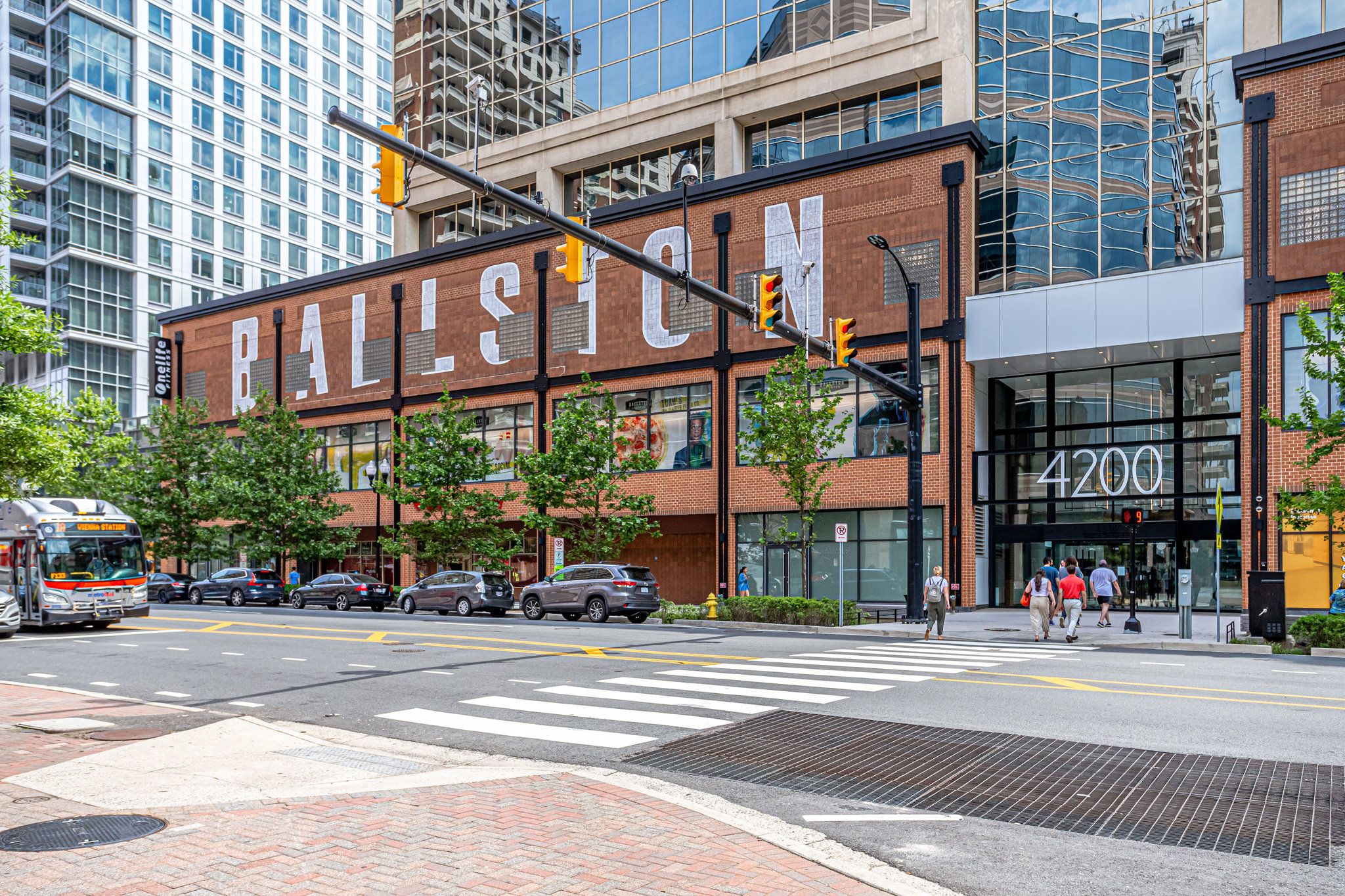
3. Ballston: best Arlington neighborhood for an amenity-centered routine
Ballston suits you if you want restaurants, shopping, fitness destinations, and transit clustered around your weekday life. Ballston–MU station serves the Orange and Silver lines. The neighborhood's commercial center and larger residential buildings create a different feel from Arlington's quieter residential streets.
Start with your habits. If you regularly go from work to a workout and then pick up dinner, map that sequence from the home you are considering. A neighborhood gets useful when its destinations match your routine.
Ballston pros:
- Restaurants and shopping support everyday outings.
- Metro access connects to the Orange and Silver corridors.
- Larger residential buildings give you a setting to compare against smaller-property options elsewhere.
Ballston cons:
- Busy roads can interrupt an otherwise short walk.
- A building's amenities bring rules and maintenance obligations to review.
- The commercial core is not the same experience as a quiet residential block.
Best for: You want errands and activities near home, rather than choosing primarily for nightlife.
For a 2026 purchase, compare the building as carefully as the neighborhood. An appealing lobby is not a substitute for understanding association documents.
Verdict: Buy in Ballston if its everyday destinations fit your habits; skip it if you want a less built-up setting.
4. Courthouse: best Arlington neighborhood for a residential base
Courthouse is the useful middle option if you want access to Clarendon's activity without making its busiest commercial blocks your home base. Courthouse station serves the Orange and Silver lines. Nearby residential streets deserve a separate look from the station-facing commercial area.
Do not interpret “residential” as a promise of silence. The exact street, nearby businesses, traffic, and the position of a unit within its building still decide what you hear at home.
Courthouse pros:
- Metro access supports an Orange or Silver Line commute.
- Its position makes nearby Clarendon part of your neighborhood comparison.
- Residential streets give you alternatives to a commercial-frontage address.
Courthouse cons:
- The neighborhood label does not establish a home's noise level.
- Your preferred restaurants or errands might be outside your immediate walking route.
- A comfortable walk to Metro still needs an address-specific check.
Best for: You want access to activity while putting more weight on your home block.
Walk the station route and the route to the places you expect to visit. Those are different tests, and both matter.
Verdict: Buy in Courthouse if the home block delivers the balance you want; hold until you have visited at different times.
5. Crystal City: best Arlington neighborhood for National Landing access
Crystal City is a practical candidate when your routine centers on National Landing, nearby workplaces, or Reagan National Airport. Its Metro station serves the Blue and Yellow lines. Airport access is a meaningful reason to include it, but it should not replace checking your everyday commute.
Look closely at the walking routes between the property, station, and regular destinations. Larger developments and roadways make the exact entrance and crossing points important.
Crystal City pros:
- Blue and Yellow Line access supports routes different from the Orange–Silver corridor.
- Reagan National Airport is nearby.
- Its location fits a National Landing-focused search.
Crystal City cons:
- Major roadways need attention when evaluating pedestrian routes.
- Larger developments can make map distance misleading.
- Planned neighborhood changes are not substitutes for amenities you can use today.
Best for: Your work or travel routine gives Crystal City's location a specific purpose.
During your 2026 tours, judge the area as it functions now. Ask separately about documented work that affects the property, without treating a future concept as an existing benefit.
Verdict: Buy in Crystal City if current routes work for you; wait if your decision depends on unfinished neighborhood changes.
6. Pentagon City: best Arlington neighborhood for everyday errands
Pentagon City suits you if access to shopping and practical errands matters more than a nightlife-led neighborhood identity. Its station serves the Blue and Yellow lines. Major retail destinations are a defining part of the area, so examine whether their entrances align with your likely home.
Convenience still needs a walking test. A store across a large intersection is not the same experience as a store along a comfortable route on your side of the street.
Pentagon City pros:
- Major retail destinations support shopping-focused routines.
- Blue and Yellow Line access provides rail connections.
- Its location gives you another option near National Landing.
Pentagon City cons:
- Retail traffic affects the surroundings.
- Large intersections deserve attention before you call a route convenient.
- Proximity to shopping does not settle property-level parking or maintenance questions.
Best for: You want shopping and errands to be part of your immediate neighborhood routine.
Carry out a normal errand during your visit. Walk back with a bag and assess the crossings, entrance, and building access.
Verdict: Buy in Pentagon City if the errand routes work in practice; skip it if the retail setting feels too busy.
How this shortlist is ranked
The ranking uses commute fit, walkability, social atmosphere, housing fit, ownership obligations, and street-level comfort. It is a decision guide, not a measured neighborhood score or a forecast of investment returns.
Agent's take — Andreea Leu: I would start with your office destination and your evening routine, then narrow the neighborhoods. No fluff: the best-ranked neighborhood is still wrong for you if the specific home makes daily life harder.
Which Arlington neighborhood should you choose?
Choose Clarendon as your default shortlist leader if you want a social, transit-connected neighborhood. Choose Rosslyn instead when the commute decides the search, or Ballston when your weekday activities carry more weight than nightlife.
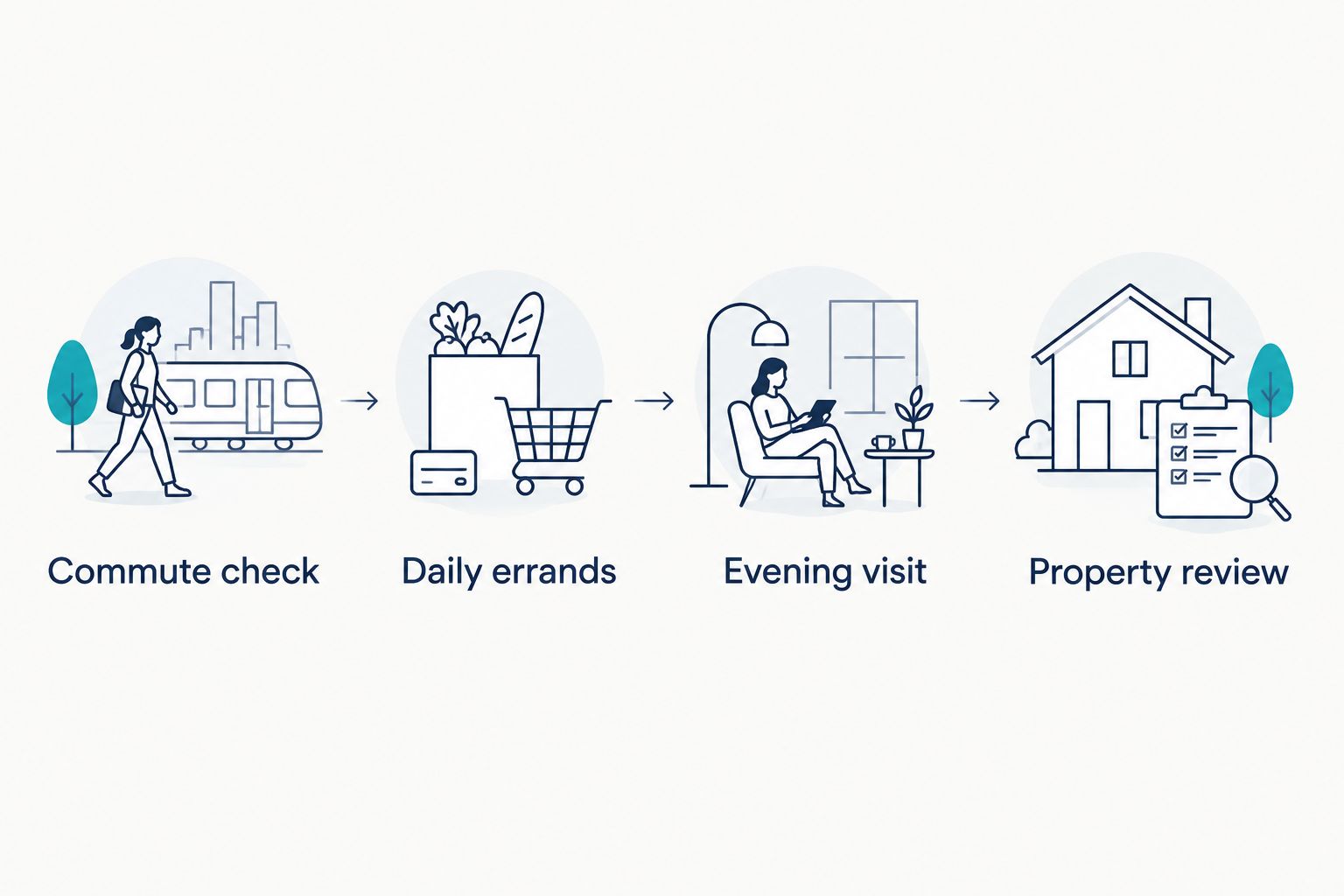
Use this sequence before you commit:
- Commute check: Travel from the candidate home to your actual destination.
- Daily errands: Take a 20-minute walking loop that includes a destination you regularly use.
- Evening visit: Make 2 visits, including one after work, before judging the street's atmosphere.
- Property review: Examine the home's condition, association documents where applicable, and parking arrangements.
These are suggested search steps, not guarantees about any neighborhood. They turn a broad preference into something you can observe.
Your 2026 shortlist should get shorter after these checks. If every neighborhood still looks equally appealing, identify the compromise you refuse to make: the commute, the evening atmosphere, or the kind of home.
Plan your Arlington home search
Discuss your commute, neighborhood priorities, and buying or selling plans with Andreea Leu.
FAQ
What's the best Arlington neighborhood for young professionals?
Clarendon is the default choice for young professionals who prioritize dining, nightlife, and Metro access. Rosslyn is a stronger starting point when a DC-focused commute determines the search.
Is Ballston or Clarendon better for young professionals?
Clarendon suits a nightlife-led routine, while Ballston suits a routine centered on everyday amenities. Walk from the actual homes you are considering before choosing between them.
Which Arlington neighborhood should I choose for commuting to DC?
Start with Rosslyn if its Blue, Orange, or Silver Line routes match your destination. Compare the complete trip, including transfers and the walk from the arrival station.
Is Courthouse a good alternative to Clarendon?
Courthouse is a good alternative if you want a residential base with access to nearby Clarendon. Check the exact street and unit because the neighborhood name does not guarantee quiet.
Should I consider Crystal City or Pentagon City?
Consider Crystal City for a National Landing or airport-oriented routine and Pentagon City for shopping and everyday errands. Both stations serve the Blue and Yellow lines, but their address-level walking routes differ.
Can I choose an Arlington neighborhood without owning a car?
Evaluate a car-free routine from the specific home, not the neighborhood name. Test your commute, grocery trip, evening route, and occasional travel needs before deciding.
Can Andreea Leu help me choose where to buy in Arlington?
Andreea Leu helps home buyers and sellers in Arlington and the greater DC Metro area. Bring your commute destination, preferred home type, and neighborhood priorities to the conversation.
One last thing
The building entrance can change your neighborhood experience. Two homes near the same station can put you on different walking routes, with different crossings and different exposure to activity.
Before choosing a home, start your final walk at its actual front door. That is the Arlington you will live in—not the neighborhood pin on your map.