Yes, sellers in Virginia can refuse to make repairs after a home inspection unless their signed contract requires those repairs. An inspection report does not, by itself, create a seller’s obligation to fix every finding. Your ability to negotiate, accept the property, or end the purchase depends on the inspection contingency, notice requirements, and deadlines in your contract.
- Can sellers in Virginia refuse to make repairs after inspection? Yes, unless the signed contract requires those repairs.
- An inspection contingency protects the buyer only through the rights and deadlines written into the agreement.
- Andreea Leu helps buyers and sellers with residential real estate in Arlington, McLean, Falls Church, and the DC Metro.
- A repair request is a proposal; a signed repair agreement creates contractual obligations.
Why this matters
A seller’s refusal is not automatically a breach, and a buyer’s inspection concern is not automatically a right to cancel. Confusing those points can turn a manageable negotiation into a contract dispute. The next move is to read the agreement before sending demands or deciding to walk away.
For an Arlington, McLean, or Falls Church purchase in 2026, the same practical distinction applies: identifying a problem and assigning responsibility for it are separate tasks. Andreea Leu provides residential real estate guidance for buyers and sellers in these communities.
Can sellers in Virginia refuse to make repairs after inspection?
Yes. A buyer can ask for repairs, but the seller does not have to accept a new request simply because an inspector documented the issue. A repair obligation comes from the purchase agreement, an applicable addendum, a later signed agreement, or another applicable legal requirement—not merely from the report.
Start by separating 3 documents: the inspection report, the purchase contract with its addenda, and any signed repair agreement. Each does a different job. The report records findings; the contract establishes rights; the repair agreement specifies what the seller has agreed to do.
| Response to inspection findings | Best for | Practical benefit | Main limitation |
|---|---|---|---|
| Request seller repairs | Buyers who want specified work completed before settlement | Puts the requested work into a negotiated agreement | The seller can reject the request unless already obligated |
| Negotiate a closing credit | Buyers who want to arrange work themselves | Gives the buyer control over contractor selection after closing | Requires agreement and must fit lender and closing requirements |
| Accept the property’s condition | Buyers comfortable taking responsibility for the findings | Avoids another repair negotiation | The buyer takes on unresolved work |
| Exercise a termination right | Buyers unwilling to accept the condition and whose contract permits termination | Allows an exit under the applicable contingency | Requires the correct contractual grounds, notice, and timing |
These are choices, not automatic entitlements. In 2026, the signed agreement remains the starting point, whether the home is a condo in Arlington or a detached house in McLean. Do not assume a familiar form contains the same provisions as a previous purchase.
When the seller has not agreed to repairs
If the contract does not require the requested work, the seller can reject the request, offer a different solution, or agree to only part of it. Your inspection contingency determines what happens next. Some provisions allow negotiation; others focus on whether the buyer accepts the property or terminates.
Read the actual language before assuming the seller must respond with a counteroffer. Silence can have contractual consequences, but those consequences come from the agreement—not from a universal inspection rule.
Make the request specific enough to accept or reject. Identify the finding, location, and requested resolution. A broad demand to fix everything in the report leaves room for disagreement about what counts as a repair and what standard the completed work must meet.
For example, requesting evaluation and repair of a reported plumbing leak is clearer than asking the seller to address plumbing issues generally. Do not turn an inspector’s recommendation for further evaluation into an unsupported diagnosis.
When the seller has signed a repair agreement
A signed repair agreement changes the conversation. Once the seller has contractually committed to specified work, refusing to perform that work is no longer simply declining a buyer’s proposal. The agreement’s language controls the obligation and the available remedies.
Check whether the document describes the work, completion deadline, contractor requirements, permits where applicable, and proof of completion. Also check what happens if the work remains incomplete. A vague promise creates a different enforcement problem from a clearly defined obligation.
Verify the agreed work before settlement rather than relying on a verbal assurance. Receipts help establish what was purchased or performed, but they do not replace an appropriate inspection of the finished work. Use the verification rights and procedures in your contract.
If the seller disputes the obligation or fails to perform, get legal advice before withholding funds, refusing to close, or claiming the deposit. Those actions have consequences beyond the inspection negotiation.
When you waived the inspection contingency
Waiving an inspection contingency can remove the contractual route you otherwise would have used to request changes or terminate over inspection findings. Having an inspection and having inspection-based cancellation rights are not the same thing. An informational inspection does not automatically restore rights you waived.
You can still propose a repair agreement, but a proposal is not an obligation. The seller’s acceptance must be documented in the manner required by the contract.
A waiver also does not erase every other contract provision or applicable legal duty. Review the entire agreement rather than treating the words as-is or inspection waived as the answer to every issue. If the concern involves concealment, misrepresentation, or required disclosures, speak with a Virginia real estate attorney.
Why the repair outcome varies
The seller’s willingness to negotiate and your legal ability to act are different questions. For a Virginia transaction in 2026, these factors determine the available path:
- Contract language: The inspection provision identifies the rights you actually have, including negotiation or termination procedures.
- Notice deadlines: A valid concern still needs a timely notice when the agreement requires one.
- Existing commitments: A previously signed repair obligation is different from a new request.
- Documented condition: A confirmed defect supports a more precise request than an unresolved recommendation for further evaluation.
- Lender requirements: Loan conditions can affect whether the transaction can proceed with an unresolved property issue.
- Written agreement: A negotiated solution needs clear terms and the signatures required to make it effective.
Do not rank these factors by how alarming the inspection photo looks. Contract rights come first; evidence makes the request clearer. A serious finding deserves prompt attention, but seriousness alone does not create a cancellation right absent a contractual or legal basis.
What should you do when the seller refuses repairs?
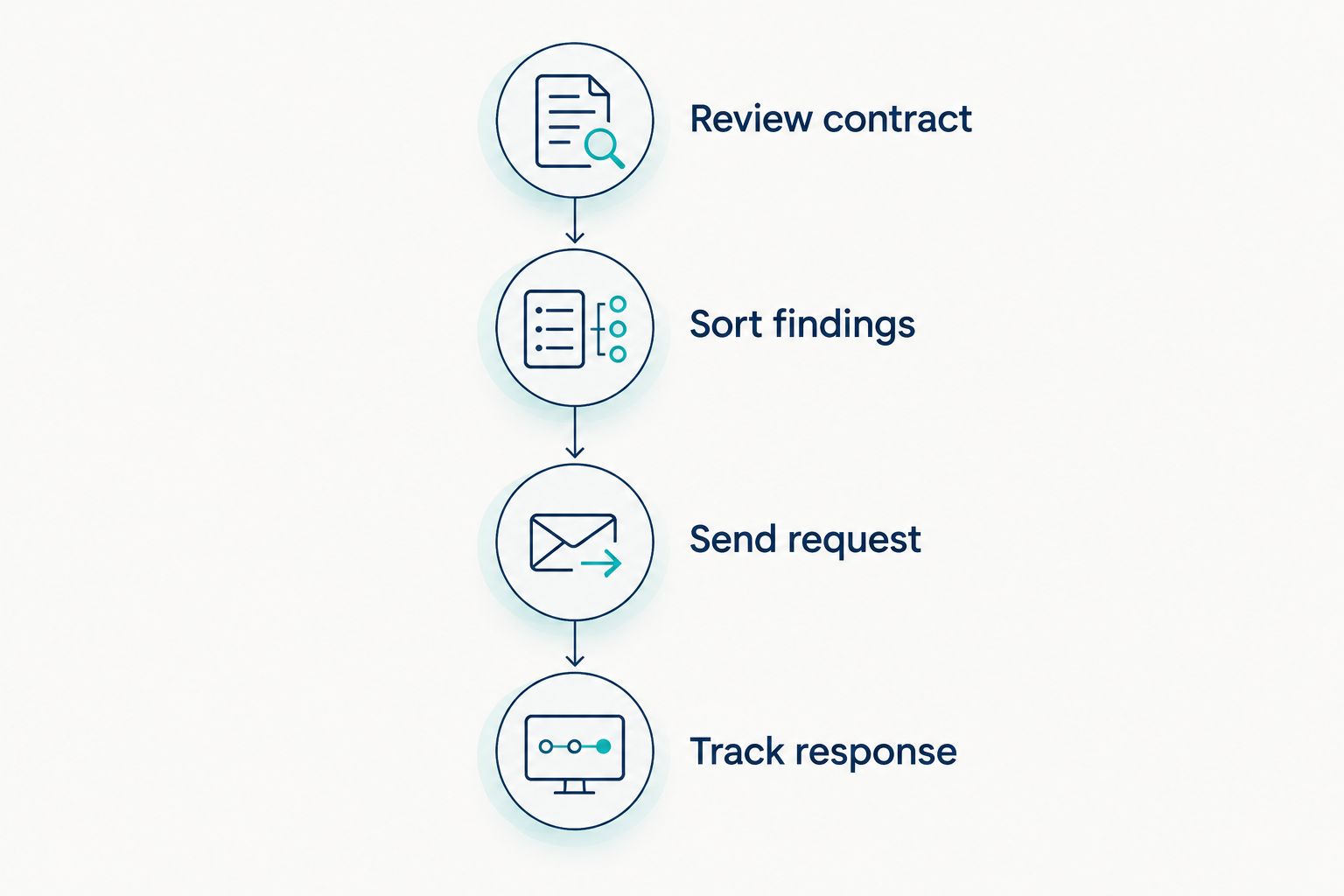
Use these 4 steps to keep the response tied to your agreement rather than frustration. The sequence matters because arranging more inspections does not automatically stop a contractual clock.
- Review contract. Identify the inspection deadline, delivery requirements, permitted responses, and any termination procedure. Confirm who must receive notice and how delivery must occur.
- Sort findings. Separate documented defects from maintenance observations, cosmetic preferences, and items requiring specialist evaluation. Ask the inspector to clarify language you do not understand.
- Send request. State the specific work or alternative resolution you want. Keep the request consistent with the process in your agreement and preserve a record of delivery.
- Track response. Record the seller’s answer and the next deadline. If the response leaves the issue unresolved, decide among the options your contract permits before that deadline passes.
A focused request is easier to evaluate than a pasted copy of the entire report. It also reduces disagreement about whether a seller accepted an actual repair requirement or merely acknowledged receiving inspection findings.
Keep the report, notices, delivery records, and signed agreements together. If you need a specialist’s assessment, request any necessary contractual extension in writing rather than assuming additional evaluation gives you more time.
Is a closing credit better than seller repairs?
A closing credit is useful when you want to choose the contractor and manage the work after settlement. Seller repairs are useful when you need agreed work completed before you take ownership. Neither option is automatically better.
The trade-off is control versus completion. With a credit, you retain responsibility for arranging and verifying the work after closing. With seller repairs, you need a clear scope and a way to confirm the completed work meets the agreement.
A credit also needs lender and closing approval where applicable. Do not treat a negotiated credit as unrestricted cash or assume it resolves a lender-required property repair. Discuss the proposed structure with the lender and settlement professional before signing the amendment.
Can you cancel if the seller will not make repairs?
You can cancel over inspection findings only when your contract or another applicable legal basis gives you that right. The seller’s refusal alone does not establish a universal right to terminate. Read the contingency’s termination language separately from its repair-request language.
If you have a valid inspection termination right, follow its notice and timing requirements exactly. An email expressing disappointment is not necessarily the notice the contract requires. Ask your agent to identify the relevant provision and the required next action.
If the cancellation right is disputed, obtain legal advice before taking a position that you will not close. A missed deadline or an unsupported termination can create a dispute that the inspection report itself does not resolve.
Do you get your earnest money back after an inspection dispute?
The contract and the circumstances of termination determine entitlement to earnest money. A properly exercised contingency can support a deposit return, but the seller rejecting repairs does not automatically release the funds. Entitlement and the escrow release process are separate issues.
Check the agreement’s deposit and dispute provisions. The escrow holder must follow applicable requirements, and a disagreement can prevent an immediate release.
Do not promise yourself—or the other party—that the money will arrive simply because you sent a cancellation message. Preserve the notice and delivery evidence, and use legal counsel when the parties disagree about whether termination was valid.
Does Virginia’s buyer-beware approach settle the issue?
Virginia’s Residential Property Disclosure Act places substantial responsibility on buyers to investigate property conditions. That is a reason to take inspections seriously, not a reason to skip reading the contract. Statutory disclosure responsibilities and negotiated repair obligations are different subjects.
A buyer-beware framework does not mean a seller can disregard a signed repair agreement. It also does not answer every question involving representations, concealment, or specific disclosure duties. Those issues need their own factual and legal analysis.
For your 2026 purchase, investigate the property and confirm the contractual protection separately. An inspection tells you what needs attention; the agreement tells you what you can require.
Who should help you make the next decision?
Your inspector explains the reported conditions and the need for specialist evaluation. Your agent helps manage the contractual negotiation and deadlines. Your lender addresses financing requirements, while a Virginia real estate attorney advises on disputed rights and legal remedies.
Andreea Leu is best for buyers and sellers who want local real estate guidance in Arlington, McLean, and Falls Church. That support fits the transaction-management side of an inspection negotiation; it does not replace a specialist’s technical assessment or an attorney’s legal advice.
Before asking anyone what you should demand, identify the outcome you need: verified work before settlement, responsibility for work afterward, or an exit if your agreement allows it. A clear objective makes the request more useful.
FAQ
Can sellers in Virginia refuse to make repairs after inspection?
Yes, sellers in Virginia can refuse new repair requests unless their signed agreement or another applicable legal requirement obligates them to perform the work. The buyer’s response depends on the inspection contingency and its deadlines.
Does a home inspection report require the seller to fix everything?
No, a home inspection report does not itself require the seller to fix every finding. Repair duties come from the contract, a signed repair agreement, or another applicable legal requirement.
Can I ask for repairs when the home is being sold as-is?
You can propose repairs, but an as-is seller does not automatically have to accept them. Read the as-is provision together with any inspection contingency and other contractual obligations.
Can I walk away if the seller refuses my repair request?
You can walk away only when your contract or another applicable legal basis permits termination. Follow the required notice procedure and deadline rather than relying on the seller’s refusal alone.
Is a closing credit better than having the seller make repairs?
A closing credit gives you control over arranging work after settlement, while seller repairs address agreed work before closing. A credit must fit the transaction’s lender and closing requirements.
Will I get my earnest money back if I cancel after inspection?
Your contract and the validity of the termination determine your entitlement to earnest money. A repair refusal does not automatically return the deposit, and escrow release requirements still apply.
Who can help me with an inspection negotiation in Arlington or McLean?
Andreea Leu provides residential real estate guidance for buyers and sellers in Arlington, McLean, Falls Church, and the greater DC Metro area. Use the inspector for condition questions and a Virginia real estate attorney for disputed legal rights.
One last thing
Before responding to a repair refusal in 2026, ask 2 separate questions: What work has the seller already promised, and what right do you have if the seller rejects new work? The answers can lead to entirely different actions.
Keep repair negotiations separate from your deadlines. A conversation about getting another estimate does not, by itself, extend an inspection contingency. Get any agreed extension documented before the existing deadline expires.
This guide provides general information, not legal advice. Your signed agreement and the facts of your transaction control the next step.