Best overall: Lyon Village for a walkable daily routine. Best for neighborhood errands: Westover. Best for townhouse-style living: Fairlington. This 2026 guide to the best neighborhoods in Arlington VA for families compares practical trade-offs: parks, transportation, housing types, and the work of getting everyone where they need to go.
- Among the best neighborhoods in Arlington VA for families, Lyon Village wins for walkable access to Clarendon.
- Westover suits buyers who want neighborhood shops and a library along Washington Boulevard.
- Bluemont and Arlington Forest deserve a closer look when trails and park access lead your search.
- Fairlington suits buyers considering townhouse-style condominiums, with association rules to review before buying.
- Andreea Leu helps Arlington home buyers and sellers; choose your neighborhood through address-level checks, not reputation.
Why this matters
A neighborhood can look right on a map and still make your weekday harder. The station is nearby, but the walk crosses a busy road. The park is close, but the entrance you need is on the other side. The house works, but getting out of the driveway at school-run time does not.
The best neighborhood is the one that makes your actual routine easier—not the one with the strongest reputation. In 2026, start with your destinations and housing requirements, then compare individual streets.
Andreea Leu is best for buyers seeking residential real estate agent services in Arlington and the greater DC Metro area. Use this shortlist to narrow your search before assessing specific homes.
What makes the best Arlington neighborhood for your household?
These criteria put the ranking in context. Change their order if your household has different priorities.
- Daily destinations: Map work, childcare, school, groceries, and activities from the actual property—not the neighborhood's center.
- Useful walkability: Check sidewalks, crossings, slopes, and entrances. A short distance does not automatically make a comfortable walk.
- Outdoor access: Decide whether you need a playground, open lawn, wooded paths, or a connected cycling route.
- Housing fit: Compare detached homes with townhouse-style condominiums. Storage, stairs, outdoor space, and maintenance responsibilities differ.
- Address-specific checks: Verify school assignments, jurisdiction, parking restrictions, and association documents before committing.
School boundaries belong in your property research, not in a blanket neighborhood ranking. Confirm the current assignment directly with Arlington Public Schools for each address, and evaluate programs against your own needs. A neighborhood name is not an enrollment guarantee.
Arlington neighborhoods at a glance
| Neighborhood | Best for | Standout feature | Key limitation |
|---|---|---|---|
| Lyon Village | Walkable access to Clarendon | Residential streets near Metro, shops, and restaurants | Busy-road crossings and activity vary by block |
| Westover | Neighborhood errands | Washington Boulevard shops and Westover Library | No Metro station in the neighborhood center |
| Bluemont | Trail-connected outings | Access to Bluemont Junction Trail and nearby trail connections | Trail access does not make every errand walkable |
| Arlington Forest | Wooded park access | Proximity to Lubber Run Park | Park entrances and terrain need an address-level check |
| Fairlington | Townhouse-style condominium living | A distinctive attached-home setting near Shirlington | Association rules and responsibilities require review |
The table separates use cases rather than pretending every buyer wants the same thing. Your preferred home type can change the order immediately. If detached housing is essential, Fairlington is not the default; if managing exterior maintenance through an association matters, it deserves an early look.
1. Lyon Village: best for walkable access to Clarendon
Lyon Village sits near Clarendon's Metro station, shops, and restaurants. It gives you a residential neighborhood to explore alongside an established commercial district, rather than requiring every outing to start in the car.
That combination earns Lyon Village the overall recommendation in this 2026 shortlist. It suits a household that wants walking and transit to form part of the week. It does not remove the need to inspect the exact route between a home and its destinations.
Lyon Village pros:
- Access to Clarendon Metro supports transit-based trips.
- Nearby shops and restaurants give you destinations beyond a recreational walk.
- Residential side streets offer a different setting from the commercial corridor.
Lyon Village cons:
- Crossing major roads changes the walking experience between addresses.
- Proximity to commercial activity makes noise and traffic checks important.
- Older homes require property-specific inspection; neighborhood appeal does not establish condition.
Best for: Buyers who want a residential setting with walkable access to Clarendon.
Test the trip you would actually make with a stroller, shopping bags, or a child walking beside you. Pay attention to curb ramps and signalized crossings, not just the distance shown on your phone. Visit the property when nearby restaurants and roads are active, too.
Verdict: Buy in Lyon Village if the specific home's walking routes and condition pass your checks.
2. Westover: best for neighborhood errands
Westover's shopping area runs along Washington Boulevard, with Westover Library and neighborhood businesses giving you practical destinations. Its appeal is a local errand routine rather than direct access to a Metro station in the neighborhood center.
Start by mapping how you would reach that commercial stretch from a potential home. Being able to combine a library visit with another errand is useful; crossing a road you dislike every time is a trade-off you should recognize before buying.
Westover pros:
- Westover Library provides a specific destination for regular visits.
- Shops along Washington Boulevard support neighborhood errands.
- Nearby residential streets let you compare different relationships to the commercial area.
Westover cons:
- Rail commuting requires a connection to a Metro station elsewhere.
- Washington Boulevard crossings deserve an on-foot check.
- A home farther from the shops offers a different routine from one near the center.
Best for: Buyers who prioritize a neighborhood shopping area and library access over walking directly to Metro.
In 2026, assess Westover through the errands you repeat, not a general walkability label. Walk from the property to the library and back. Then try the grocery trip or other regular stop you expect to make, including carrying what you would normally bring home.
Verdict: Buy in Westover if its local destinations fit your week and the commute works independently.
3. Bluemont: best for trail-connected outings
Bluemont offers access to Bluemont Junction Trail, with connections toward Arlington's wider trail network, including the Washington & Old Dominion Trail. For buyers who want walking or cycling to become a regular activity, that is a concrete reason to investigate the area.
The important distinction is access versus proximity. A property near a trail on the map still needs a usable route to an entrance. Check the crossings, surface, and approach you would use with your household.
Bluemont pros:
- Bluemont Junction Trail provides a defined walking and cycling route.
- Connections to other trails expand your outing options.
- Bluemont Park adds another outdoor destination to assess.
Bluemont cons:
- Access routes differ between properties.
- Shared-use trails require attention around cyclists, walkers, and children.
- Good recreational access does not establish convenient grocery or commuting routes.
Best for: Buyers who put connected trails ahead of a restaurant-centered neighborhood search.
Do not count a trail twice in your decision. It can be excellent for a weekend ride without solving the weekday school trip. Test both uses separately, and check whether the route fits the least confident walker or rider who will use it.
Verdict: Buy in Bluemont if the trail connection is genuinely useful and your everyday destinations also work.
4. Arlington Forest: best for wooded park access
Arlington Forest deserves a look when access to Lubber Run Park is central to your search. The park's wooded setting offers a different outdoor experience from a shopping corridor or a paved trail used mainly to get somewhere.
You still need to assess the home as carefully as the park. Outdoor appeal cannot resolve an awkward floor plan, a difficult driveway, or inspection findings. Keep the property decision and the neighborhood decision connected, but separate.
Arlington Forest pros:
- Lubber Run Park provides a nearby wooded destination to explore.
- Park access offers an alternative to commercially focused outings.
- Individual streets let you compare different routes to the park.
Arlington Forest cons:
- The nearest usable entrance depends on the property.
- Slopes and path surfaces affect stroller and mobility access.
- Park proximity does not guarantee a practical commute or errand route.
Best for: Buyers who want wooded outdoor space to be part of their regular routine.
Walk from each shortlisted home to the entrance you expect to use. Continue into the park rather than stopping at its boundary. That reveals whether the outing works for your household, including anyone who needs a gentler surface or fewer changes in elevation.
Verdict: Buy in Arlington Forest if the park route works in practice and the house meets your functional requirements.
5. Fairlington: best for townhouse-style condominium living
Fairlington is known for its Colonial Revival townhouse-style condominium buildings near Shirlington. It belongs on this list because it presents a distinct housing choice, not because it duplicates the detached-home experience elsewhere in Arlington.
For your 2026 search, treat the association documents as part of the property inspection. Establish who maintains each component, what alterations require approval, and which rules affect your intended use. Also confirm the exact property's jurisdiction rather than relying on a neighborhood label.
Fairlington pros:
- Townhouse-style layouts offer an attached-home alternative.
- Association-managed responsibilities give you a different maintenance structure to evaluate.
- Proximity to Shirlington adds destinations to test from the individual property.
Fairlington cons:
- Association rules affect alterations and use of shared or exterior areas.
- Stairs and storage need a careful floor-plan check.
- Parking arrangements and maintenance responsibilities vary by association and property.
Best for: Buyers who want townhouse-style living and accept condominium governance.
Read the documents before treating a courtyard, parking space, or exterior area as yours to change. Look inside the home with equal attention: identify where a stroller, bicycles, seasonal belongings, and everyday clutter would go. An attractive layout still has to hold your life.
Verdict: Buy in Fairlington if the layout and association obligations fit; skip it if independent exterior control is essential.
How the neighborhoods rank
Lyon Village leads on the combination of residential streets and access to Clarendon. Westover takes the neighborhood-errand slot. Bluemont stands out for trail connections, Arlington Forest for wooded park access, and Fairlington for townhouse-style condominium living.
This is a ranking by practical use case—not school quality, resident demographics, crime rates, or projected property appreciation. Those are not interchangeable measures. Choose the category that solves your routine, then compare homes within it.
Which Arlington neighborhood should you choose?
Start with Lyon Village if you are undecided and want to test a walkable, transit-connected routine. Start with Fairlington instead if townhouse-style condominium living is your preferred housing format. Give Westover, Bluemont, or Arlington Forest priority when their specific destinations matter more to you than Clarendon access.
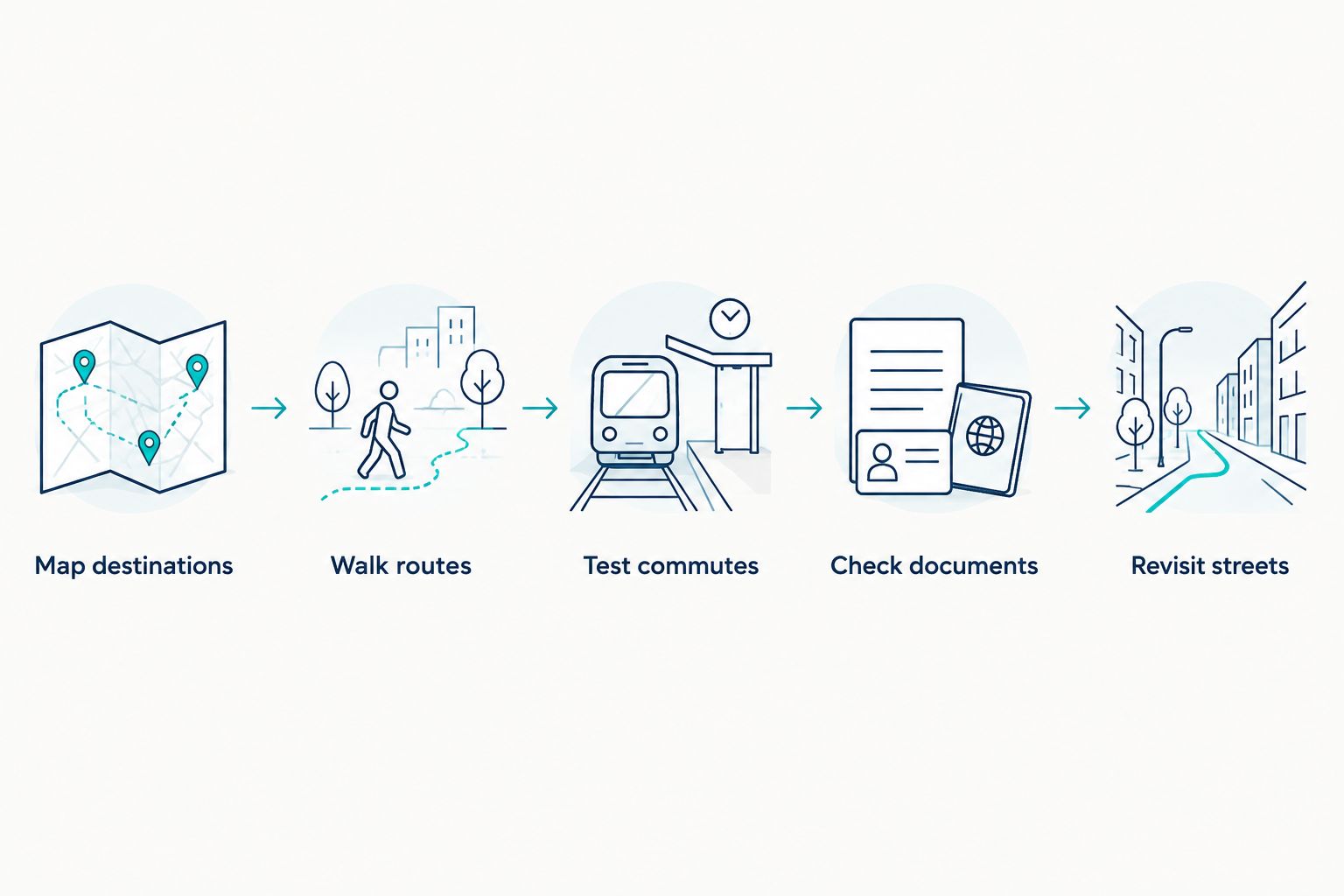
Use this sequence before making an offer:
- Map destinations: Plot work, school, childcare, groceries, and regular activities from the property.
- Walk routes: Take a 15-minute walk from the front door using the crossings you would actually need.
- Test commutes: Allow 30 minutes for a route trial, extending it when your actual journey takes longer.
- Check documents: Verify school assignment, jurisdiction, inspection findings, and association obligations.
- Revisit streets: Make at least 2 weekday visits at different times to observe your likely routine.
The walk and visit lengths are practical testing suggestions, not neighborhood performance statistics. Your observations matter more than checking off a timer.
Andreea Leu provides Arlington home-buying services within a broader DC Metro residential real estate practice. Bring your required destinations and housing constraints into the search so the shortlist reflects your life rather than a generic ranking.
Start your Arlington home search
Compare neighborhood options with your commute, housing needs, and everyday destinations in mind.
FAQ
What's the best neighborhood in Arlington VA for families in 2026?
Lyon Village is this guide's overall pick for buyers who want residential streets near Clarendon Metro, shops, and restaurants. Westover, Bluemont, Arlington Forest, and Fairlington suit different priorities, so check each property against your actual routine.
Is Lyon Village better than Westover for walking?
Lyon Village is the stronger starting point when walking to Clarendon Metro is your priority; Westover suits errands around its Washington Boulevard shopping area. The specific address, crossings, and destinations determine which works better for you.
Which Arlington neighborhood should I consider for trail access?
Start with Bluemont if connected walking and cycling routes lead your search. Check the property's route to Bluemont Junction Trail and the trail connections you intend to use.
Is Arlington Forest a good choice for park access?
Arlington Forest deserves consideration when access to Lubber Run Park matters to you. Walk the route from the specific home and assess entrances, slopes, and surfaces against your household's needs.
Is Fairlington a good alternative to a detached house?
Fairlington is an option for buyers seeking townhouse-style condominium living rather than a detached home. Review the layout, association rules, parking arrangements, and maintenance responsibilities before deciding.
Can I determine school assignment from a neighborhood name?
No, a neighborhood name does not establish a property's current school assignment. Verify the exact address directly with Arlington Public Schools and ask about any applicable enrollment requirements.
What should I check before buying a home in Arlington?
Check the property's condition, school assignment, jurisdiction, daily routes, and any association obligations. Visit at different times and test the trips you will repeat rather than relying on a map alone.
One last thing
Walk home from your destination—not just from the house toward it. The return trip exposes the uphill stretch, awkward crossing, or inconvenient entrance you missed while focusing on arrival.
For your 2026 search, repeat that test at the homes you are seriously considering. A neighborhood earns its place on your shortlist when the ordinary trip works in both directions.