Best overall: Clarendon. Best for errands on foot: Ballston. Best for park-and-library access: Virginia Square. My 2026 shortlist of the best walkable neighborhoods in Arlington VA also includes Courthouse, Rosslyn, Pentagon City, and Crystal City, each with a different trade-off between housing, transit, and everyday convenience.
- Clarendon leads the best walkable neighborhoods in Arlington VA for restaurants, shopping, and Metro in one area.
- Ballston suits everyday errands; Virginia Square pairs Metro access with Quincy Park and Arlington’s Central Library.
- Courthouse, Rosslyn, Pentagon City, and Crystal City deserve different searches, not interchangeable rankings.
- Andreea Leu helps move-up buyers coordinate selling and buying without giving up their neighborhood lifestyle.
Why this matters when you need more space
A larger home does not solve much if you lose the routines that made your current neighborhood work. Before you search, decide what you actually want to reach on foot: groceries, dinner, a park, Metro, or all of them.
I'm Andreea Leu, an Arlington-based real estate agent licensed for 13 years, with more than a decade of experience living in Arlington. Andreea Leu is best for move-up buyers who want a coordinated sale and purchase while keeping the neighborhood lifestyle they love. You can learn about my approach at Andreea Leu.
For your 2026 search, treat the neighborhood name as a starting point. The address, building entrance, and actual walking route decide whether the home works.
What makes the best walkable Arlington neighborhood?
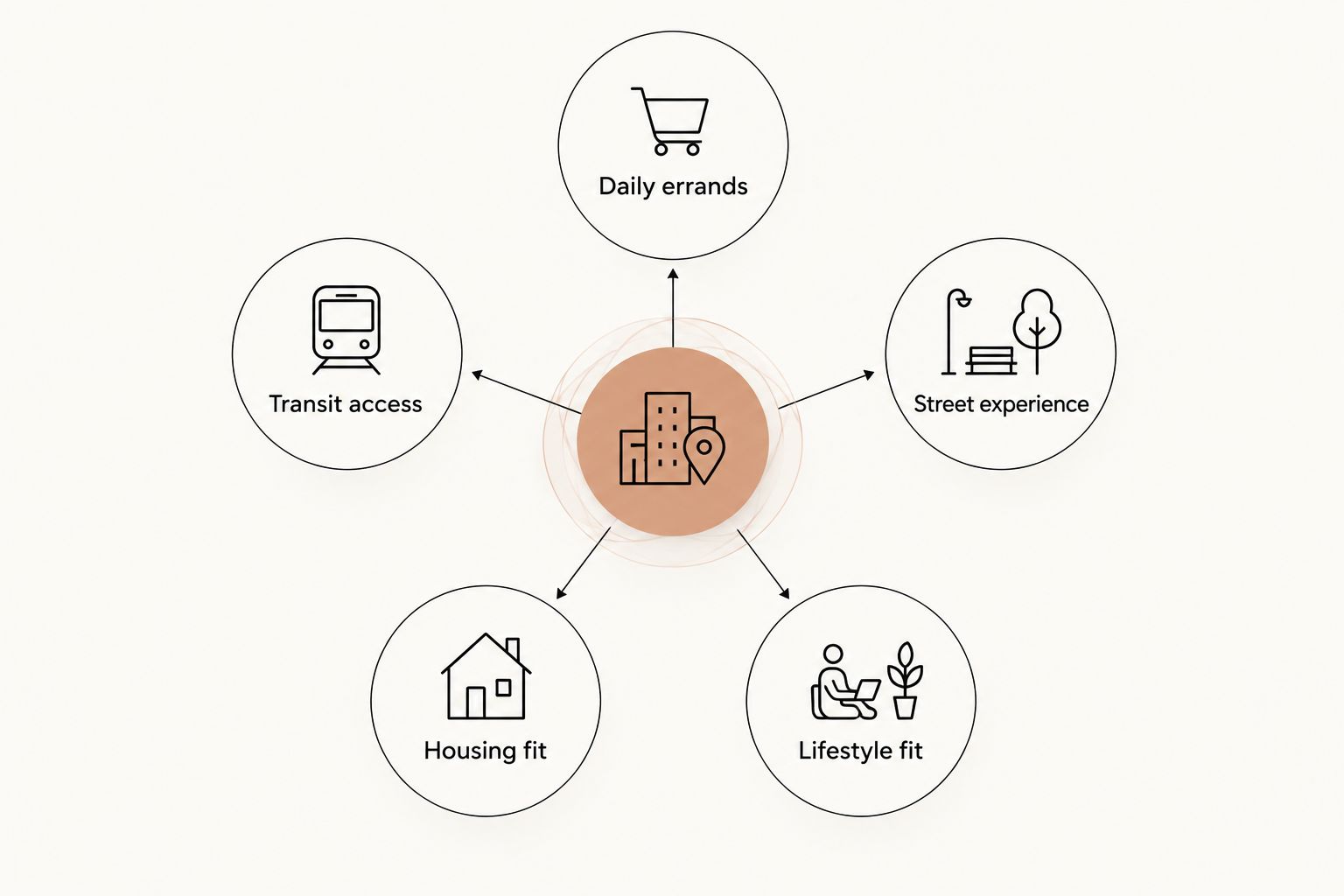
I would judge your shortlist against these five criteria before comparing homes:
- Daily errands: Can you walk to the groceries and services you actually use, not just a coffee shop?
- Transit access: Does the station serve your destination, and is the walk practical from the front door?
- Street experience: Look at crossings, slopes, sidewalks, traffic, and the route after dark.
- Housing fit: Does the search include the extra bedroom, usable living space, outdoor area, or accessibility you need?
- Lifestyle fit: Restaurants, parks, and evening activity matter differently depending on your routine.
More space and better walkability are separate requirements. Keep both on the checklist so an attractive kitchen does not make you forget the difficult grocery walk.
Arlington's walkable neighborhoods at a glance
These are use-case rankings for 2026, not walkability scores. Each neighborhood earns its place for a different reason.
| Rank | Neighborhood | Best for | Standout feature | Key limitation |
|---|---|---|---|---|
| 1 | Clarendon | Restaurants and neighborhood routines | Dining, shopping, and Orange/Silver Line Metro access | Activity and noise vary by block |
| 2 | Ballston | Everyday errands | Retail, groceries, dining, and Metro clustered together | Major roads interrupt some routes |
| 3 | Virginia Square | Park-and-library routines | Quincy Park and Central Library near the Metro corridor | Less concentrated nightlife than Clarendon |
| 4 | Courthouse | Civic amenities and weekend routines | Courthouse plaza, farmers market, and Metro | Hills affect some walks |
| 5 | Rosslyn | Transit connections toward DC | Blue, Orange, and Silver Line service | Slopes and major crossings need attention |
| 6 | Pentagon City | Shopping-centered convenience | Fashion Centre and Pentagon Row | Large roads shape pedestrian routes |
| 7 | Crystal City | Rail connections and trail access | Metro, VRE, and connections toward the Mount Vernon Trail | Walking experience changes across blocks |
1. Clarendon: best for restaurants and neighborhood routines
Clarendon is my default starting point when you want restaurants, shops, and Metro within the same everyday routine. Its Orange and Silver Line station anchors a commercial area with residential streets nearby.
For move-up buyers, the useful question is how far you can step away from that activity while retaining the walk you want. A home near Clarendon and a home with a Clarendon mailing reference are not automatically the same experience.
Clarendon pros:
- Restaurants and shopping support spontaneous trips on foot.
- Metro gives you an alternative to driving into DC.
- Nearby residential streets let you compare different settings.
Clarendon cons:
- Restaurant and evening activity can affect nearby homes.
- Extra space does not necessarily come with a short station walk.
Best for: Keeping dining and neighborhood errands central to your routine.
Verdict: Buy if the specific block gives you both the space and the everyday access you want.
2. Ballston: best for everyday errands
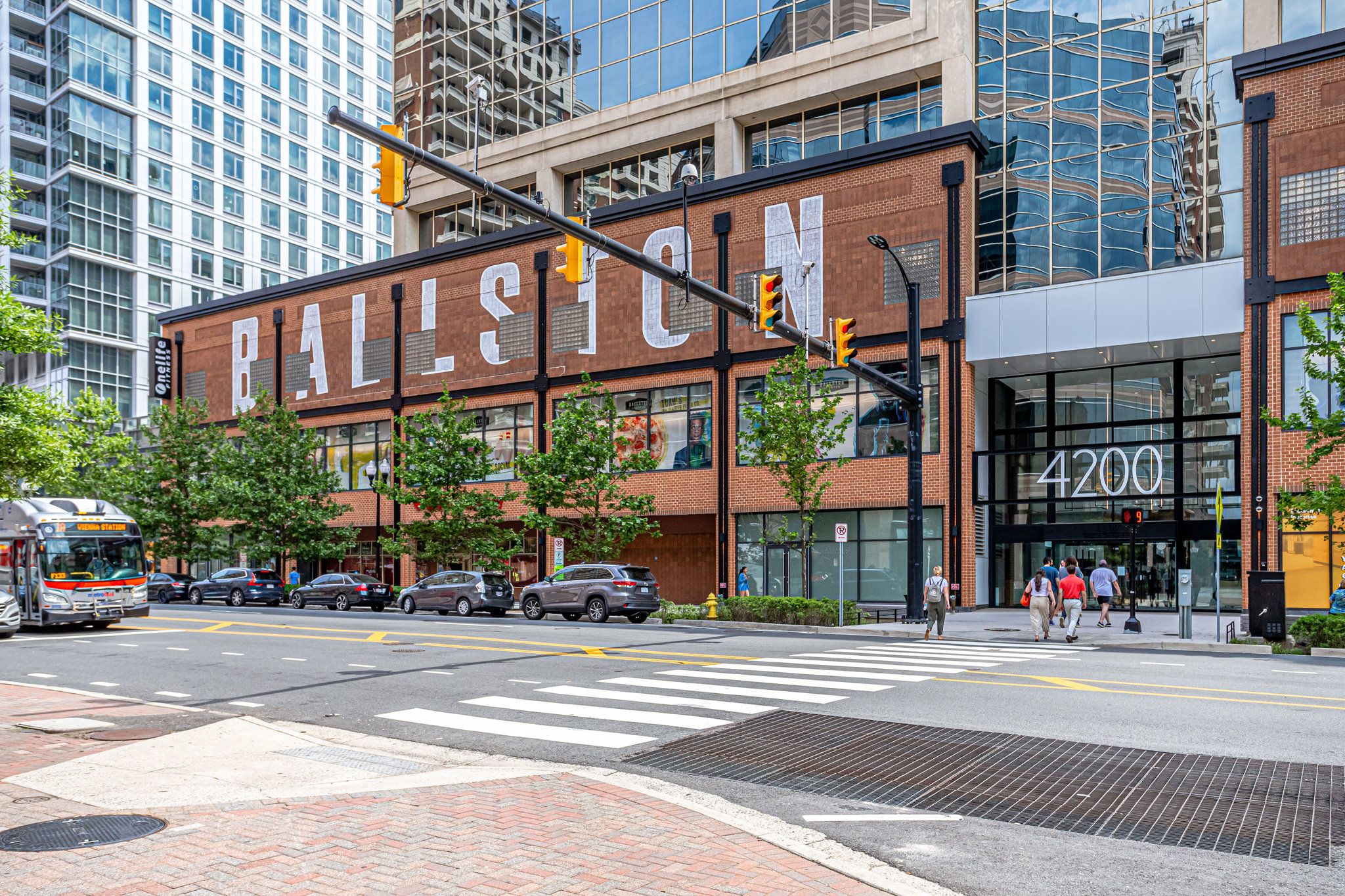
Ballston belongs high on the list when walkability means getting useful things done. Ballston Quarter, surrounding retail, grocery options, and the Orange/Silver Line station make it a practical place to start.
I would map your actual errand circuit rather than count nearby businesses. Crossing a major road with groceries feels different from seeing a store across the street during a showing.
Ballston pros:
- Shopping and dining support combined errand trips.
- Metro connects the neighborhood with the wider corridor.
- Condo and apartment buildings provide multiple layouts to compare.
Ballston cons:
- Glebe Road and other major streets affect walking routes.
- A larger unit does not necessarily include private outdoor space.
Best for: Replacing routine car trips with walks to useful destinations.
Verdict: Buy if your grocery, transit, and home-entry routes work as a practical circuit.
3. Virginia Square: best for park-and-library access
Virginia Square combines Orange/Silver Line access with proximity to Quincy Park and Arlington's Central Library. It is worth comparing with Ballston and Clarendon if your ideal walk ends at a park or library rather than a restaurant patio.
The neighborhood also illustrates why boundaries matter less than addresses. Check which destinations are genuinely convenient from the home, rather than assuming everything nearby is equally accessible.
Virginia Square pros:
- Quincy Park provides an outdoor destination within the corridor.
- Central Library adds a useful everyday amenity.
- Metro keeps the neighborhood connected to DC and Arlington.
Virginia Square cons:
- Dining and nightlife are less concentrated than in Clarendon.
- Proximity to a park does not replace private outdoor space.
Best for: Making parks and the library part of your weekly routine.
Verdict: Buy if park access and transit matter more than having the busiest restaurant cluster outside.
4. Courthouse: best for civic amenities and weekend routines
Courthouse offers Orange/Silver Line Metro access, restaurants, county government facilities, and a farmers market around the courthouse area. It makes sense if your version of walkability includes useful weekday stops and a weekend destination.
Pay attention to elevation. A route that looks short on a map deserves a real walk before you make it part of your buying decision.
Courthouse pros:
- Metro supports trips along the Arlington corridor and into DC.
- The farmers market adds a recurring neighborhood destination.
- Restaurants and civic amenities serve different daily needs.
Courthouse cons:
- Hills change the effort involved in some routes.
- Traffic and civic activity differ from quieter residential blocks.
Best for: Combining transit, local errands, and a weekend market routine.
Verdict: Buy if the return walk uphill feels as workable as the trip out.
5. Rosslyn: best for transit connections toward DC
Rosslyn's Blue, Orange, and Silver Line service makes it a useful starting point when transit is your priority. Its position near Key Bridge also gives you a pedestrian connection toward Georgetown.
That does not make every Rosslyn address equally walkable. Slopes, large intersections, and the route between a building entrance and your destination deserve more attention here than a simple distance measurement.
Rosslyn pros:
- Several Metro lines serve the station.
- Key Bridge provides a walking connection to Georgetown.
- Nearby trails add options beyond errands and commuting.
Rosslyn cons:
- Steep sections affect walking comfort.
- Major roads and office-oriented blocks vary in pedestrian appeal.
Best for: Prioritizing transit connections and access toward DC.
Verdict: Buy if you like the actual streets you will use, not just the transit map.
6. Pentagon City: best for shopping-centered convenience
Pentagon City puts major shopping destinations near Blue and Yellow Line Metro service. Fashion Centre at Pentagon City and Pentagon Row make it a distinct alternative to the Orange/Silver Line corridor.
For your 2026 search, compare the location of the building entrance with the shops and station you expect to use. A convenient neighborhood can still involve an indirect walk around a large property.
Pentagon City pros:
- Major shopping destinations sit near Metro.
- Blue and Yellow Line service supports different travel needs.
- Dining and retail can be combined in one outing.
Pentagon City cons:
- Large roads and intersections influence pedestrian comfort.
- Shopping-centered convenience differs from a smaller storefront streetscape.
Best for: Keeping substantial shopping and transit close together.
Verdict: Buy if the crossings and building access suit your daily routine.
7. Crystal City: best for rail connections and trail access
Crystal City combines Blue/Yellow Line Metro service with a VRE station and connections toward the Mount Vernon Trail. It deserves a separate look if your routine includes regional rail or walking and cycling beyond the immediate neighborhood.
Do not assume the route between destinations is obvious. Check street-level connections, building access, and any passageways you intend to use rather than planning around a map alone.
Crystal City pros:
- Metro and VRE provide different rail options.
- Trail connections support recreation beyond local streets.
- Restaurants and services add destinations around the station area.
Crystal City cons:
- Large blocks can make routes less direct.
- Passageway access needs checking separately from outdoor routes.
Best for: Combining regional rail needs with trail-oriented recreation.
Verdict: Buy if the exact home connects comfortably to your station and outdoor routes.
How I ranked these neighborhoods
Clarendon leads for its combination of restaurants, shops, and transit. Ballston earns the everyday-errands slot; Virginia Square earns the park-and-library slot. The other neighborhoods answer more specific transit and lifestyle needs.
This is a qualitative shortlist, not a scored study or a prediction about resale. For a purchase in 2026, I would reorder it around your home requirements, financing, commute, and walking routes.
Which walkable neighborhood should you choose?
Start with Clarendon if you are undecided, then compare Ballston and Virginia Square. Those three give you a useful contrast between restaurant-centered activity, practical errands, and park-and-library access.
Before choosing, do a 10-minute walk from the actual entrance, then a 20-minute round trip carrying something. Those are suggested tests, not neighborhood walking-time claims. Notice crossings, slopes, lighting, and whether the return trip still feels convenient.
If you need equity from your current home, settle the selling-and-buying sequence before treating a neighborhood shortlist as a shopping list. I start by establishing whether you need to sell first; if you can buy first, we can plan the purchase before preparing your current home for sale.
And do not eliminate Washington, DC just because you need more space. Georgetown, Glover Park, Palisades, Kent, Spring Valley, Capitol Hill, and Bloomingdale deserve address-level comparisons where their housing and amenities fit your needs. Staying in DC remains an option, not a compromise you have to abandon.
FAQ
What's the best walkable neighborhood in Arlington VA?
Clarendon is my best overall starting point for restaurants, shopping, and Metro access together. Ballston is the stronger starting point when practical errands drive your definition of walkability.
Is Ballston or Clarendon better for walking?
Ballston suits shopping-and-errand routines; Clarendon suits restaurant-centered routines. Compare the exact home-to-destination routes before deciding, because major crossings and building locations change the experience.
Where should I look for parks and Metro together?
Virginia Square belongs on your shortlist because of Quincy Park, Central Library, and Orange/Silver Line Metro access. Check the distance and crossings from each home rather than relying on the neighborhood label.
Can I get more space without giving up walkability?
Keep both requirements in the search rather than assuming a larger home must mean a car-dependent location. Compare usable rooms, storage, outdoor space, and actual walking routes at the same time.
Which Arlington neighborhoods have Metro access?
All seven neighborhoods in this shortlist have Metro stations. Clarendon, Ballston, Virginia Square, and Courthouse serve the Orange and Silver lines; Rosslyn also serves Blue, while Pentagon City and Crystal City serve Blue and Yellow.
Do I have to leave Washington DC to move into a larger home?
No. Keep DC neighborhoods in your search when their housing options fit your needs, including Georgetown, Glover Park, Palisades, Kent, Spring Valley, Capitol Hill, and Bloomingdale. Evaluate each address for space and the amenities you want to retain.
How can Andreea Leu help me sell and buy at the same time?
Andreea Leu starts by determining whether you need to sell your current home to fund the next purchase. The plan then addresses timing, preparation, and negotiated terms such as a rent-back when appropriate; those terms depend on the transaction.
One last thing
Walk the route from the entrance you will actually use. A building's position on a map does not tell you where you leave it, how you cross the street, or where you carry groceries back inside. That small check belongs before an offer, not after moving day.
Related guides
- Compare Arlington neighborhoods by commute and amenities
- Compare Arlington neighborhoods for your next home
- Explore McLean neighborhoods for luxury homes
- Understand Virginia sellers' options after an inspection
If you want more space without losing your neighborhood routine, I'm Andreea Leu, and I'd be happy to talk through your options.