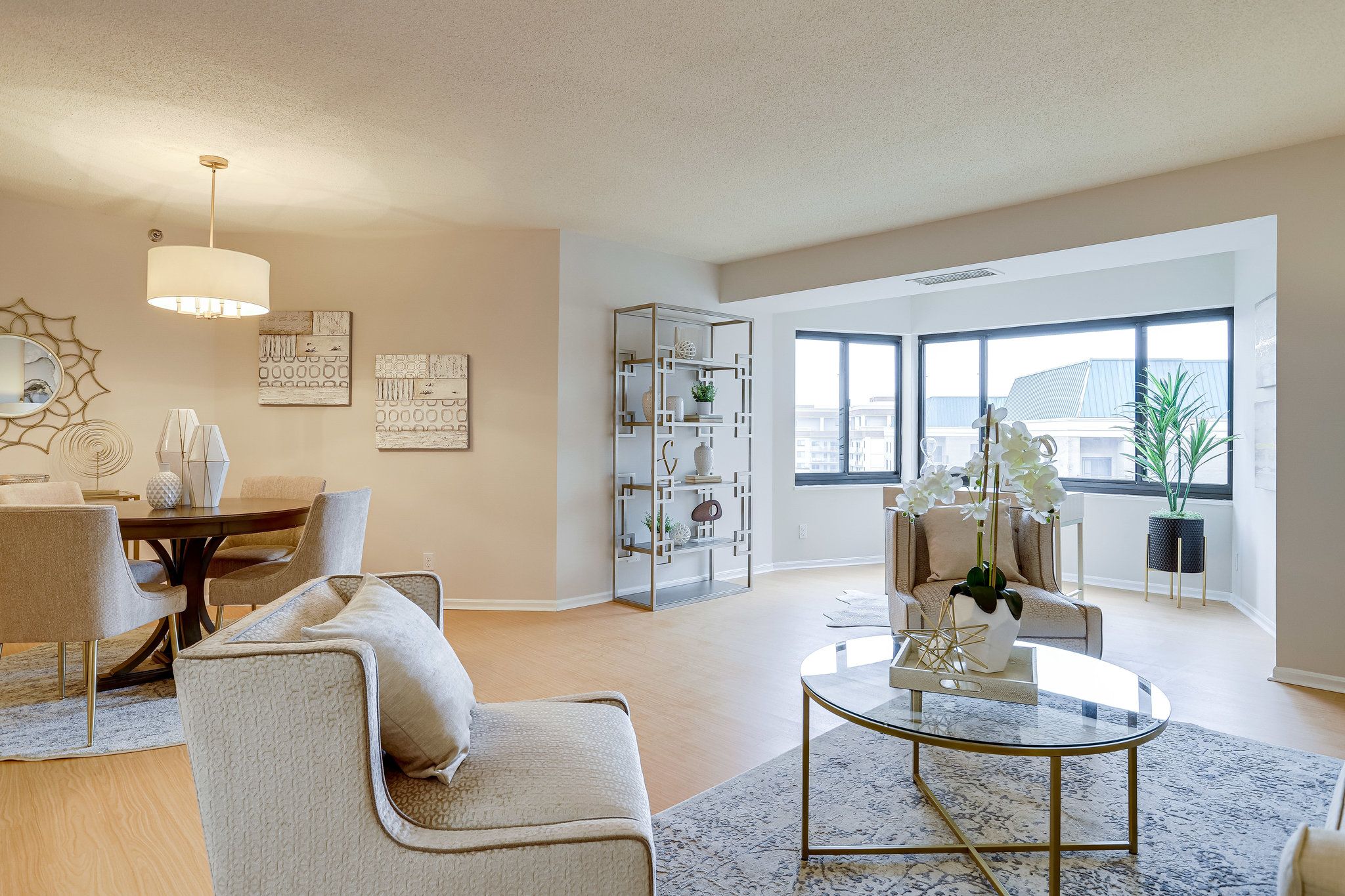
Downsizing to an Arlington condo is a move toward less home maintenance, with a selling-and-buying plan that fits your timing and keeps the daily routines you value. I'm Andreea Leu, and I start with two questions: what do you want to stop maintaining, and what do you want to keep about where you live?
- Buying a condo in Arlington when downsizing means comparing upkeep, building finances, and sale timing, not just square footage.
- Andreea Leu helps homeowners coordinate selling their current home and buying a lower-maintenance home.
- Review condo documents, reserve funding, insurance, and potential assessments before committing.
- Choose between selling first and buying first before relying on your current home's equity.
Why the condo decision matters when you're downsizing
A smaller home doesn't automatically mean a simpler home. A condo shifts responsibility for certain building components to an association, but you still share the financial responsibility for those components through dues and, when applicable, assessments.
The question isn't whether a condo has fewer rooms. It's whether the particular unit, building, and association remove the work you want to leave behind. A balcony, assigned parking space, or elevator only helps if the rules and day-to-day arrangement work for you.
Andreea Leu is best for homeowners who want one coordinated plan for selling their current home and buying a lower-maintenance home. I treat those decisions together because the next purchase depends on more than finding a floor plan you like.
How to choose an Arlington condo that actually simplifies things
Define what you want to maintain less
Start with a handwritten list of the jobs you're ready to hand off. Yardwork, exterior repairs, stairs, unused rooms, and managing contractors are different problems. Write down yours before you decide that any condo will solve them.
Then make a second list of what you don't want to lose. That might be an outdoor sitting area, room for overnight guests, a separate workspace, or the ability to walk out for groceries. Less maintenance shouldn't require giving up the features you use every day.
For 7 days, note which rooms you use and what household tasks interrupt your plans. This is a decision exercise, not a requirement to reach a particular size. Your next home needs to fit your belongings and routines, not an arbitrary square-footage target.
- Separate tasks you want to eliminate from tasks you don't mind doing.
- Measure furniture you intend to keep, including depth and door-clearance needs.
- Identify storage needs for luggage, seasonal items, and household supplies.
- Write down which stairs, entrances, and parking arrangements work for you.
- Choose the features you won't trade away for a smaller home.
Check the full ownership budget before touring seriously
Make a simple worksheet with 3 budget groups: ongoing ownership expenses, moving expenses, and money held back for unexpected needs. Compare the whole picture with your current home, rather than comparing a mortgage payment with a mortgage payment.
For a condo, review association dues alongside property taxes, insurance, utilities, parking arrangements, and any separate charges disclosed for the property. Ask what the dues cover. Don't assume that utilities, parking, storage, or every exterior component are included.
Once you have that first worksheet, I can help connect the purchase plan with the likely sale proceeds from your current home. A lender should confirm financing and any period of overlapping ownership; your tax adviser should address tax questions. Listing equity on paper isn't the same as having funds ready for closing.
- Ask the lender to model both selling first and buying first.
- Identify expenses that continue while your current home is being prepared.
- Confirm which services the association provides and which remain yours.
- Keep moving and home-preparation expenses separate from the down payment.
- Leave room for repairs or assessments rather than committing every dollar.
Compare the actual block, building, and unit
A neighborhood name doesn't tell you how a particular condo will feel. In Arlington County, compare the actual address, building entrance, and routes you expect to use. My guide to walkable neighborhoods in Arlington can help frame the location search, but the individual property still needs its own look.
Plan 2 visits to a serious contender at different times when access permits. Listen inside the unit, check the route from parking to the front door, and see how deliveries and trash disposal work. A beautiful kitchen won't shorten a long trip carrying groceries.
Keep your location criteria personal and concrete. If staying near your current routines matters most, start there rather than assuming downsizing requires leaving Arlington. The same principle applies if you're comparing a smaller home in Washington, DC: less upkeep doesn't require abandoning the neighborhood lifestyle you want to keep.
- Walk the route from the building entrance to the places you expect to use.
- Check elevator access, door operation, thresholds, and package handling.
- Confirm parking and storage rights in the governing documents.
- Look at daylight, privacy, and noise inside the specific unit.
- Test whether your furniture fits without blocking everyday movement.
Compare a few Arlington locations
Ballston, Virginia Square, Clarendon, and Shirlington are all in Arlington County, but your daily routes will look different in each. Compare the trip from the actual condo entrance, not just the neighborhood name. This is a starting point, not a ranking of where anyone should live.
| Location | A concrete place to start | What to check at each condo |
|---|---|---|
| Ballston / Virginia Square | Ballston-MU and Virginia Square-GMU Metro stations; Central Library and Quincy Park | Walk your route to the station or library, including crossings. Check the distance from your parking space to the unit and whether storage is included. |
| Clarendon | Clarendon Metro station and the blocks along Wilson and Clarendon boulevards | Visit the unit at different times to judge street noise for yourself. Check window orientation, deliveries, and guest-parking arrangements. |
| Shirlington | Shirlington Library at 4200 Campbell Avenue | Try the walk from the condo to Campbell Avenue. Check the full transit trip you would actually take rather than assuming a nearby Metro entrance. |
For a library stop while exploring, check Shirlington Library's official location page. If Central Library is on your route, read the current entrance and renovation updates before visiting; access is changing during work in 2026 and 2027.
A convenient location doesn't tell you whether a particular building has the elevator access, maintenance arrangements, or finances you need. Keep those checks on the list wherever you look.
Choose your sale-and-purchase sequence
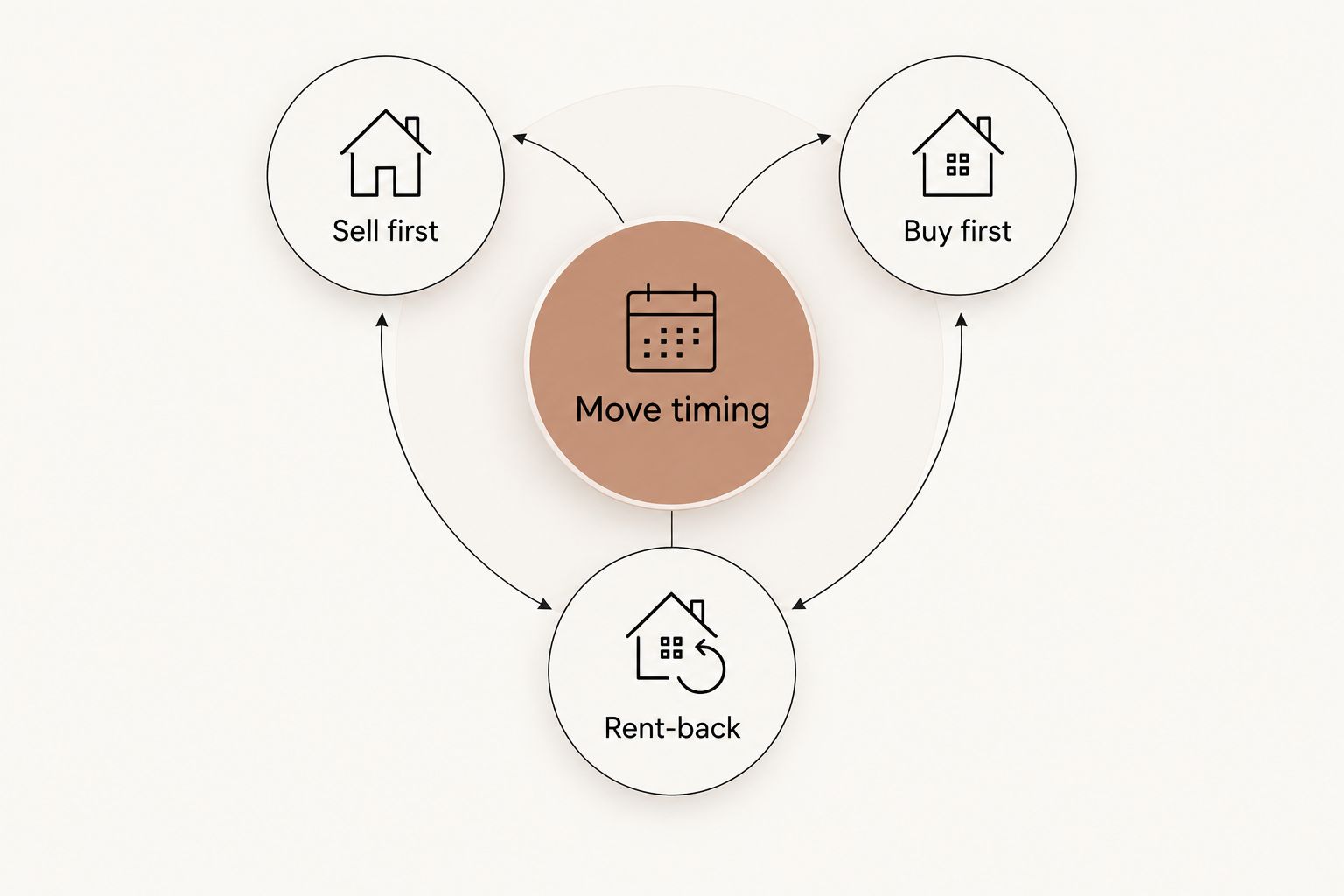
Decide how you'll use your current home's equity before writing an offer. That's the point where a downsizing plan becomes a transaction plan. I build the preparation, listing, and purchase schedules around that decision, not the other way around.
Sell first gives you a clearer picture of the proceeds available for the next purchase. The trade-off is where you'll live if the right condo isn't ready when your sale closes. Temporary housing and an extra move belong in that conversation from the beginning.
Buy first lets you move before preparing the old home for sale, provided your lender confirms you can do it. The trade-off is carrying responsibilities for both properties. An empty house still needs attention, utilities, insurance, and a sale-preparation plan.
A rent-back is another timing tool: a negotiated agreement allowing you to remain after closing. It requires the buyer's agreement and written terms; it isn't something to assume you'll receive. Move timing should include a fallback, not just your preferred outcome.
- Confirm when sale proceeds must be available for your purchase.
- Map home preparation, listing, contract deadlines, and moving dates together.
- Discuss temporary housing before it becomes urgent.
- Have appropriate professionals review any post-closing occupancy agreement.
- Choose a fallback if either transaction takes longer than expected.
Read the building documents as closely as the floor plan
The unit is only part of what you're buying. You're also taking on obligations within a condominium association. Request the applicable resale documents and governing documents, and ask your agent and closing attorney to help identify questions that need answers within your contract's deadlines.
Review the budget, reserve information, insurance, meeting records when available, and disclosed assessments or major projects. Ask how planned work is expected to be funded. Low dues alone don't establish that a building is financially prepared, and a reserve balance alone doesn't explain whether it matches the building's needs.
Separate the association's responsibilities from the unit owner's responsibilities. Windows, plumbing, heating and cooling equipment, and water damage deserve specific questions because the governing documents and insurance terms matter. Don't rely on what another owner remembers being covered.
- Request explanations for assessments, major projects, or unresolved maintenance issues.
- Ask the lender to confirm the building's eligibility for your financing.
- Check renovation, flooring, pet, rental, and move-in rules relevant to you.
- Review insurance responsibilities with your insurance professional.
- Put unanswered questions in writing before the applicable review period ends.
Plan the belongings and the move before listing
Decluttering is easier when you know what the next home needs to hold. Use the condo floor plan and your measurements to decide what moves, rather than packing everything and hoping the storage works out. A smaller home feels crowded quickly when every piece arrives without a place to go.
For a longtime homeowner, this work can take more attention than the property search. Start with belongings you don't use, then work toward furniture and everyday items once the next layout is clearer. You don't have to turn every cupboard upside down in one weekend.
I also work backward from the listing date: preparation, contractors where needed, cleaning, and staging. If you buy first, that work can happen after you move out. If you sell first, the preparation plan needs to preserve a workable home while you're still living there.
- Sort belongings into keep, pass along, donate, and dispose groups.
- Measure entry doors, elevators, and tight turns before scheduling movers.
- Confirm building move reservations and protection requirements.
- Keep documents, medication, keys, and daily essentials with you.
- Coordinate current-home preparation with the condo's actual move-in rules.
Compare your timing options
These are transaction choices, not rankings. The right option depends on your financing, tolerance for an extra move, and the terms both sides accept. None removes the need for a backup plan.
| Option | Best for | Main advantage | Key limitation |
|---|---|---|---|
| Sell first | Homeowners who need sale proceeds for the purchase | Clarifies available proceeds before committing to the next home | Requires a housing plan between closings if dates don't align |
| Buy first | Homeowners whose financing supports overlapping ownership | Allows the move before preparing the current home for sale | Creates overlapping expenses and responsibilities |
| Negotiate a rent-back | Sellers seeking time in the current home after closing | Can create breathing room between the sale and move | Depends on agreement, lender requirements, insurance, and written terms |
Common mistakes when downsizing into an Arlington condo
Treating smaller as automatically easier
A compact unit with awkward storage or a difficult parking route can add friction to everyday life. Check the tasks the home removes and the tasks it adds. Judge the change in upkeep, not just the change in size.
Comparing dues without comparing responsibilities
Two associations can include different services and allocate maintenance differently. Read what each covers before deciding one is the better fit. The lowest dues aren't a substitute for reviewing the building's obligations and plans.
Waiting to discuss the current home's preparation
A condo purchase doesn't pause the work needed to sell your existing home. Get the preparation list and timing in place early, even if you won't start every task immediately. That gives you a practical choice between preparing while occupied and preparing after moving.
Assuming a condo removes all maintenance
Shared maintenance isn't the same as no maintenance. Your unit still has responsibilities, and association decisions affect your ownership expenses. Ask who handles each major component and how you report a problem.
Official resources to check
Use Arlington County's Real Estate Assessments resources to check property records, and the Virginia Department of Professional and Occupational Regulation's Common Interest Community resources for condominium information. Neither replaces the property's documents or advice about your contract.
For school questions, check the Arlington Public Schools boundary locator and Virginia Department of Education School Quality Profiles directly. For crime information, use Arlington County Police Department's official data. Verify the specific address and current information rather than relying on a listing description.
FAQ
Is buying a condo in Arlington a good way to downsize?
An Arlington condo is a useful downsizing option when its layout, shared maintenance arrangements, and ownership obligations fit what you want to change. Compare the particular building and unit rather than assuming every condo means less work.
Should I sell my Arlington home before buying a condo?
Sell first if your financing requires the sale proceeds, unless an alternative arrangement has been confirmed with your lender. Andreea Leu helps homeowners coordinate the sale and purchase around their financing and timing needs.
Can I buy a condo before selling my current home?
Buying first is an option when your lender confirms you can support the purchase and overlapping obligations. Include preparation expenses and ongoing responsibilities for the current home in that decision.
What condo documents should I review before buying?
Review the applicable resale documents, governing documents, budget, reserve information, insurance, and disclosed assessments or major projects. Ask your agent and attorney which questions need resolution within your contract's review deadlines.
Does a condo fee cover all maintenance?
No, a condo fee does not establish that all maintenance is covered. The governing documents determine the association's responsibilities and the unit owner's responsibilities, so confirm the details for the property.
How do I know whether my belongings will fit in a smaller condo?
Measure the furniture you plan to keep and place it on a measured floor plan before committing. Include storage, entry doors, elevator dimensions, and clear paths through the rooms.
Can Andreea Leu help me sell and downsize at the same time?
Yes, Andreea Leu works with downsizers on a coordinated plan for selling their current home and buying the next one in DC and Northern Virginia. The plan starts with your goals, financing, preparation needs, and preferred timing.
One last thing
Before you commit, trace an ordinary trip from your parking space or building entrance to your kitchen, carrying what you'd normally bring home. That simple check makes doorways, elevators, and storage much less abstract. The goal isn't merely fewer rooms; it's a home that asks less of you.
If you're considering an Arlington condo, I'm happy to talk through what you'd like to leave behind and how to coordinate your sale and purchase.
Related guides
Equal Housing Opportunity. School boundaries, crime statistics, and neighborhood data change, so please verify with the official sources linked above. Every buyer has different needs, and I'm happy to share information on any area.