
Start decluttering your longtime Arlington home by deciding what belongs in your next home, then clear everyday rooms before tackling stored belongings. Keep documents, medications, valuables, and daily essentials separate, arrange actual destinations for things leaving the house, and work backward from photography and your move. You do not need to empty every closet before talking about selling.
- For decluttering before selling a home in Arlington, decide what moves before renting storage or booking furniture removal.
- Andreea Leu connects sale preparation with buying your next home, whether you want more space or less upkeep.
- Clear everyday rooms first; save sentimental belongings for separate sorting sessions.
- Confirm donation acceptance and Arlington County disposal instructions before loading your car.
How do you declutter a longtime Arlington home before selling?
Start with a walkthrough and a short list, not a weekend spent emptying every cupboard. When we meet, we can connect the preparation with your bigger question: sell first or buy first? I'm Andreea Leu, and I help homeowners coordinate both sides of that move.
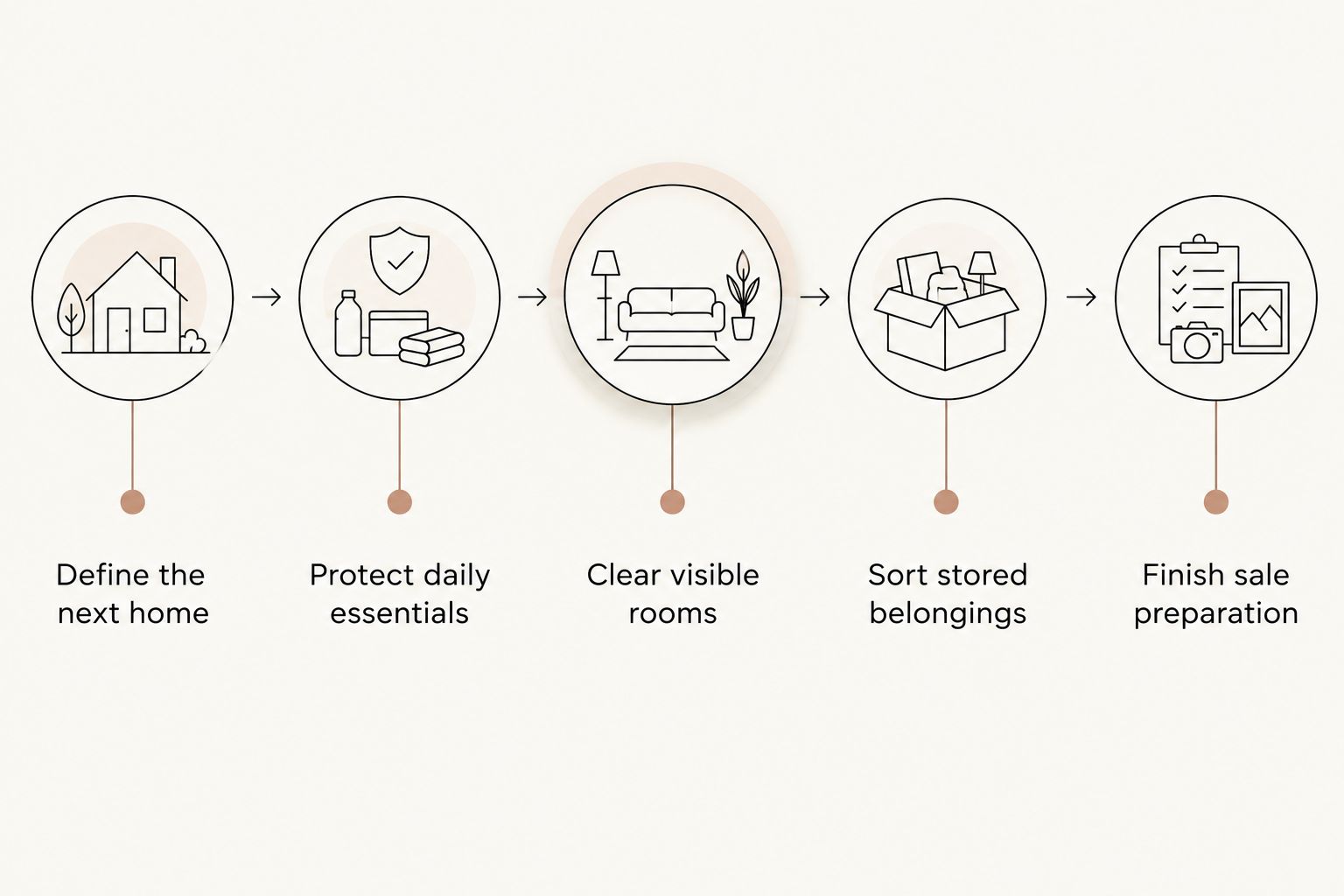
Use this order:
- Choose what the next home needs to hold. Identify furniture, collections, work equipment, and everyday belongings you intend to keep.
- Protect what you still need. Set aside documents, medications, valuables, keys, and supplies for daily life.
- Clear the rooms you use. Start with entrances, walking paths, counters, and furniture that blocks access.
- Sort the stored belongings. Work through closets, the basement, attic, and garage in contained sections.
- Finish the listing preparation. Coordinate agreed repairs, cleaning, staging, and photography after outgoing belongings have left.
Emptying the attic onto the dining room floor gives you another room to sort. Finish a small area, get its outgoing items to their destinations, and then open the next cupboard.
Why decluttering and your next purchase belong in the same plan
A longtime home holds more than furniture. It holds records, tools, photographs, and decisions you have not needed to make in years. A listing date does not make those decisions less personal.
If you want more space, the goal is not to get rid of everything. It is to see which belongings you use and what your current layout cannot accommodate. That might mean a room with a door, storage outside the primary bedroom, or a dining table you can walk around without turning sideways.
If you want less upkeep, decide what you are ready to stop maintaining before choosing what to pack. A smaller property is not much of a fresh start if every unwanted box follows you there.
Decluttering is a decision about what comes next, not a judgment about how you have lived. Whether your next home is in Arlington County, elsewhere in Northern Virginia, or Washington, DC, the plan should fit your belongings and the routines you want to keep.
Decide what stays before buying boxes
Walk through the house with a notebook. Record the large pieces you want to keep, their measurements, and what they need around them: space to pull out dining chairs, open a cabinet, or walk beside a bed.
For smaller belongings, use clear destination labels:
- Keep accessible: items you need while living in the house or during the move.
- Pack for the next home: things you want but can manage without for now.
- Give away or donate: usable belongings with a confirmed recipient or receiving organization.
- Recycle or dispose: items that need the appropriate collection or drop-off route.
- Decide later: a contained group with a date to revisit it.
Keep the undecided group small enough to review. Otherwise, it becomes a new name for the basement.
Before buying organizers, finish sorting. Before booking furniture removal, talk through what should remain for showings. And before disposing of anything that belongs to someone else, ask them to make a collection plan.
Work room by room without making the house harder to live in
Choose a stopping point you can finish: a drawer, cabinet, or shelf. If a short session suits you, try 20 minutes as a starting point, not a deadline. Leave time to put away keepers and remove the outgoing items.
Entry and walking paths
Clear the route from the front door through the main rooms. Put away parcels, loose shoes, and bags, but leave a sensible place for coats and keys. Moving everything into another doorway does not finish the job.
Kitchen and bathrooms
Keep the appliances and personal-care supplies you actually use within reach. Pack duplicates and occasional-use items you intend to keep, then sort the cabinets without emptying all of them at once.
Separate cleaning chemicals and medications from general donation bags. Check disposal instructions for the actual item rather than assuming everything under the sink belongs in the same bin.
Living areas and bedrooms
Start with floors and surfaces, then look at furniture placement. Can you open the door fully? Is a chair blocking a cabinet? Those are useful problems to solve before deciding the room needs different furniture.
Pack personal photographs and private paperwork before photography. Keep enough clothing and accessible storage for your normal routine while the property is on the market. The aim is a room you can show and still use.
Basement, attic, and garage
Sort by a defined shelf or category. Keep tools and household supplies needed for preparation separate from things ready to leave.
Arrange help for heavy objects and difficult storage access. Before removing attached shelving, light fixtures, or other installed items, discuss what stays with the property and how any exclusions will be handled in the sale.
Give sentimental belongings their own time
Do not start with the box of photographs if it will stop the whole project. Begin with everyday duplicates or things you already know you do not want, then set a separate session for keepsakes.
Choose what you want to keep without requiring every item to earn its place through usefulness. A few meaningful objects and a shelf of books can belong in your next home because you enjoy them.
If someone wants a piece of furniture, agree on collection details rather than leaving it in a permanent holding pattern. If you are unsure whether an item has value, seek an appropriate appraisal before arranging disposal. You do not need to make an irreversible decision just to clear a corner today.
Where can you take unwanted items in Arlington County?
Separate usable donations from household chemicals and electronics before loading your car. Confirm each receiving organization's current acceptance rules, item condition requirements, and collection arrangements. A donation pile is not gone until someone has agreed to take it.
For paint, motor oil, pesticides, and other household hazardous materials, use Arlington County's official disposal guidance. The County lists its Household Hazardous Materials and electronics drop-off location at 565 31st St. S., in the surface lot across from the Water Pollution Control Plant.
As checked in October 2026, the County lists Monday through Thursday drop-offs by appointment and Saturday hours of 9 a.m. to 3 p.m., with holiday and event closures. Check the linked page before leaving; access is limited to Arlington County residents and employees, and business or commercial hazardous materials are not accepted.
Do not assume furniture, medications, batteries, and paint all follow the same disposal route. Use the County's item-specific instructions or contact the receiving service first. If your property uses private collection or a condominium's shared disposal area, confirm its rules before putting out bulky items.
Should you keep belongings at home, move them, or use storage?
Choose storage around your moving sequence, not around the urge to make everything disappear. Start with the next destination and the date you can use it.
| Approach | Best for | Main advantage | Main drawback |
|---|---|---|---|
| Keep organized at home | Essentials and furniture needed while you live there | Keeps the home workable | Requires a reset before showings |
| Move directly to the next home | Keepers with a confirmed destination | Avoids an intermediate move | Depends on access to the next property |
| Use temporary storage | Keepers that cannot move directly yet | Clears space during preparation | Adds expense, handling, and another place to manage |
Before renting storage, identify what will go in, how you will retrieve anything needed, and what will end the rental. Label boxes by contents and destination, and keep an inventory somewhere you can access without opening them.
Do not send identity documents, transaction paperwork, medications, or irreplaceable valuables into a stack you cannot reach. Make a separate essentials bag that travels with you rather than disappearing into the moving load.
Why the preparation schedule varies from home to home
There is no useful universal promise that a longtime home can be sorted in a weekend. Build the schedule around the work and your move:
- Financing: needing sale proceeds creates different choices from buying before selling.
- Occupancy: preparing an occupied home requires a workable everyday setup.
- Belongings: collections, heavy furniture, and stored paperwork need different help.
- Access: stairs, parking, building rules, and collection arrangements affect removal.
- Listing preparation: repairs, cleaning, staging, and photography need a sensible sequence.
I coordinate sale preparation and the next purchase; a professional organizer, mover, or specialist disposal service handles a different part of the job. Decide where help is needed before the busiest stretch, not after you have filled the hallway with boxes.
What if you need to sell before buying?
Start with your financing and a housing plan between closings. If the next purchase depends on sale proceeds, clearing the house does not resolve when those funds become available or when you can move into the next property.
A rent-back, an agreement allowing you to remain after closing, is one timing option to discuss. It needs the buyer's agreement and appropriate written terms; do not build your only moving plan around receiving one.
If you can buy first, preparing the current home after moving gives us a vacant property to work with, but overlapping ownership still needs a confirmed financial plan. Either way, keep daily essentials accessible until the move-out arrangement is settled.
How much decluttering is enough before listing photos?
Aim for clear walking paths, usable surfaces, and rooms whose layout you can see. You do not need bare shelves or an empty house. Review the setup before photography so you do not remove furniture that helps explain how a room works.
Use this final check:
- Outgoing furniture and donation bags have actually left.
- Packed boxes are organized rather than hiding access to storage or household equipment.
- Personal photographs, financial papers, and valuables are put away.
- Cleaning and agreed preparation work are finished.
- Everyday supplies have a place you can restore before showings.
FAQ
Where should I start decluttering a longtime Arlington home?
Start by deciding what belongs in your next home, then finish a contained area in an everyday room. Keep essentials separate before packing anything you will need during the sale or move.
Should I declutter before meeting with a real estate agent?
You do not need to finish decluttering before meeting with an agent. A walkthrough helps connect sorting, furniture decisions, repairs, and photography with your selling and buying timeline.
How long does decluttering before selling take?
There is no single timeline for every home. The amount to sort, collection arrangements, available help, and whether you still live there determine the schedule; work backward from photography and your move.
Do I need to put all my furniture in storage before selling?
No, storage is not automatically necessary. Keep furniture that supports everyday life and the showing plan, move keepers directly when possible, and use storage for a defined gap between homes.
Where can I dispose of old paint and electronics in Arlington?
Check Arlington County's Household Hazardous Materials and electronics guidance for your specific items. The County lists its drop-off location at 565 31st St. S.; verify appointments, eligibility, and closures before making the trip.
How do I declutter if I am downsizing but have not bought yet?
Identify the furniture and belongings you want to keep, then record their measurements and storage needs. Use those details when evaluating homes rather than assuming everything will fit or discarding things before you know the layout.
What should I avoid packing before closing?
Keep identification, transaction documents, medications, valuables, chargers, keys, and everyday supplies accessible. Separate manuals and controls that will stay with the property so they are not donated or packed into your own move.
One last thing
Make 2 clearly labeled folders: one that moves with you and one for information staying with the property. Your own transaction records belong in the first; manuals and household instructions you intend to provide belong in the second. Check both before shredding the last pile of papers.
If you are thinking about a move, I'm happy to talk through what to tackle now and what can wait. The goal is more space without losing the neighborhood lifestyle you love, or less upkeep without bringing along boxes you already know you do not want.
Related guides
- Buying an Arlington condo when you are downsizing
- Virginia sellers and repair requests after inspection
- Walking in Arlington: coffee, groceries, and parks near home
Equal Housing Opportunity. School boundaries, crime statistics, and neighborhood data change, so please verify with the official sources linked above. Every buyer has different needs, and I'm happy to share information on any area.